Ownership and the Humane Economy
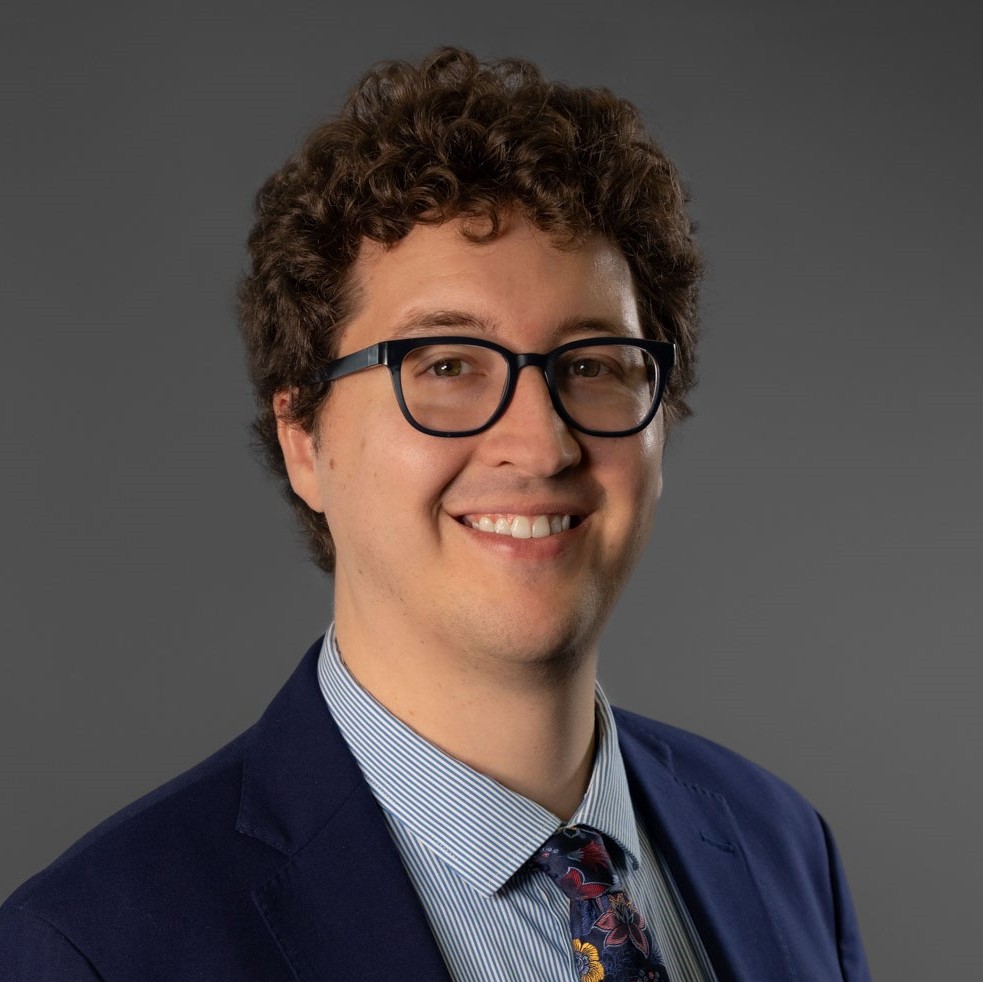
by Tony Guidotti
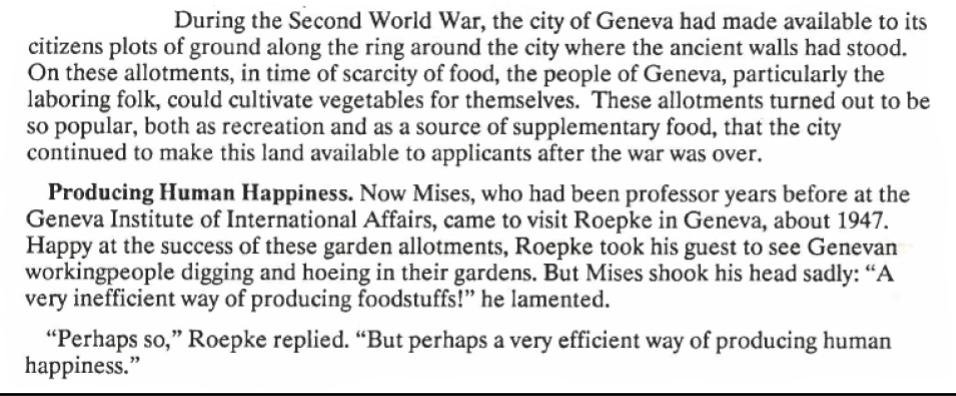
Image Credit: Kirk, Russell. 1989. “A Conservative Program for a Kinder, Gentler America.”
We are taught to think about things in particular ways. The way we are taught to see the world, and the “rules” that structure it, change how we interpret the world. The limits of our moral imagination – including the potential to envision an economy befitting human dignity and supporting the common good – are often calcified as a result of this early formation.
We often, like (Ludwig von) Mises at the Genevan gardens, stick to that rigid interpretation and fail to see what is before us. The goal of my research is to help us be like (Wilhelm) Röpke and adapt our interpretation of ownership in the modern economy.
This can be difficult because in addition to the formation that shapes our schema, we also have a lifetime of experience with the status quo. Because of this, the structures and systems around us are taken as given; we often don’t even notice them.
Consider a goldfish.

Image Credit: Mart Productions [via Pexels]
The fish’s life is water. Every moment of its life is in the water. Without water, the fish will die. The nature of the water surrounding the fish dictates every aspect of the fish’s life. The fish does not notice the water. We are often like fish.
We have been enculturated to think about systems and institutions that are fundamental to society in a particular way, and often do not even consider them at all. I call these «fishbowl institutions.»
Ownership is a fishbowl institution. How ownership is structured is foundational for any economy: ownership shapes the exchange of goods and services between buyers and sellers, grants access and control over capital and resources, and mediates the governance of economic enterprises.
Every aspect of the economy is affected by ownership, but we rarely invoke it as a fundamental tool for transforming the economy.
The thesis of my work is that the structure of ownership of key elements of the economy can help communities and businesses address pressing societal challenges and support human values.
This should be intuitive. If we consider many past historic injustices – colonialism, slavery, neoliberal structural adjustment programs – ownership is at the heart of many. The growing productivity-pay gap is mediated by the ownership relationship; in the United States, since 1979 productivity has grown 1.4% per year while compensation has only grown 0.6%. Since the year 2000, the labor share of income has fallen by more than 10%. The data is similar globally.
By expanding who can participate as an owner, and by increasing the prevalence of communitarian, widespread, and shared forms of ownership, we can take important steps to make a more just and inclusive economy. A Harvard Business School working paper shows that if all private firms became 30% employee owned, the wealth of the bottom 50% would quadruple while the wealth of the 90th to 99th percentile would drop by less than 1% and the wealthiest 1% would only see a 14% decrease.
We know that locally owned businesses circulate three times as much wealth as non-locally owned businesses. Worker ownership leads to increased wages, higher financial performance and resilience for the business, and anchors economic production within communities. Another approach is steward ownership, which separates economic rights from control rights to ensure that businesses perpetually fulfill their mission. This is not even to mention the potential impact of reforms in land and resource ownership. By transforming ownership, we can make a tremendous impact. You can read more about these benefits in our report, The Possibilities of Worker Ownership.
And the time to do so is now.
The silver tsunami describes the massive wave of business owners who are over the age of 55. In the United States, half of all privately owned businesses will have an ownership transition in the next fifteen years. This represents 2.9 million businesses, 32 million workers, 6.5 trillion in revenue, and 10 trillion in assets. While this data is from the United States, research shows similar trends around the world.
Less than 20% of these businesses are passed to family members and only 30% of companies listed for sale find a traditional buyer. A significant portion of these businesses close – costing workers jobs and harming local economies – or are purchased by non-local extractive ownership models like private equity, robbing communities of value and further exacerbating inequality and economic exclusion.

Image Credit: George Desipris [via Unsplash]
If we don’t act now, the challenges of our economy will get worse.
Fortunately, there are structures of ownership in line with the EoF vision and growth in the capital available for these transitions. My research documents how new innovations in ownership address our current moment and advance the common good. This includes companies like…
Optimax, a precision optics manufacturer, whose retiring owners choose to transition the company into employee ownership trust which not only ensured the business stays in the community that built it and ensured its employees will always share in the profits they generate, but also created new competitive advantages related to customer retention and industry leading technology development investment.
Patagonia, an outdoors goods manufacturer and retailer, which created a groundswell of interest in steward ownership when it transitioned into a perpetual purpose trust that named earth as its only stakeholder and donates all profits – $100 million annually – to supporting environmental conservation.
Newman’s Own, a packaged food and beverage producer, while itself was founded as a for-profit company, is owned by a foundation that utilizes all of the profits – more than $600 million since 1982 – to support kids facing poverty and other forms of adversity.
Caledonia Mining Corporation, a publicly-traded company that innovated how local ownership of individual mines – including shared ownership by employees and the communities that surround the mine – could create new alignments that led to a more equitable distribution of value, improved environmental performance, and supported long-term capital improvements while increasing investor returns.
We can choose to be like goldfish and accept the structure of ownership as given, or we can recognize ownership as an essential and underutilized tool for creating a more just and inclusive economy. I hope you will join me in the latter.
—
Thank you to the Economy of Francesco Academy for supporting my research and enabling me to incorporate more normative aspects into my work. You can view the article published as part of my fellowship – Decency and Employee Ownership – in the International Review of Applied Economics. You can learn more about my work and The Ownership Project at Harvard Business School by visiting https://bit.ly/m/theownershipproject.
Tony Guidotti
2025-2026 EoF Academy Fellow