The Role of Interreligious Dialogue in the Labor Market Inclusion of Migrant Muslim Women in Italy:
the Case of the Community of Sant’Egidio
by Olena Komisarenko
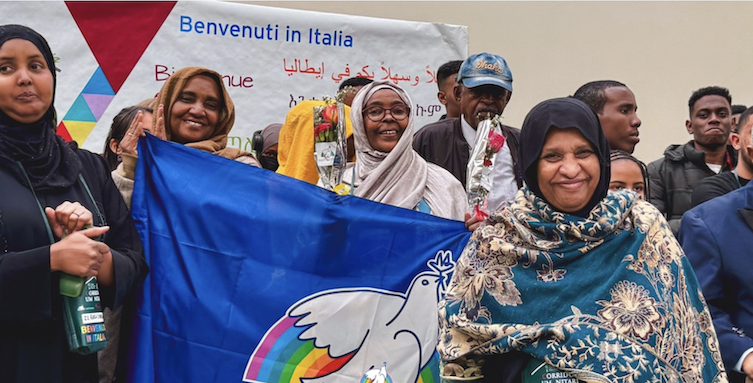
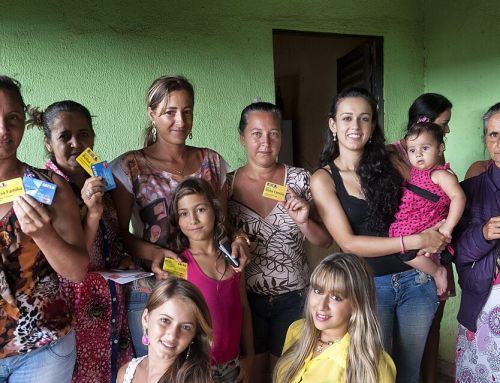
Photo credit: https://www.santegidio.org/
This research examines the role of interreligious dialogue in supporting the labor market inclusion of migrant Muslim women (MMW) in Italy, with special attention to the Community of Sant’Egidio. The study is situated within contemporary Italian society, which has become increasingly multicultural through migration. Although migrants and refugees contribute significantly to the host country, they continue to encounter barriers to inclusion, especially in employment. These obstacles are particularly evident for non-EU migrants and visibly religious minorities. For MMW, exclusion is intensified by the intersection of gender, migrant status, and religious identity, especially when Islamic practices or symbols, such as the hijab, become grounds for prejudice.
The paper therefore addresses a gap in existing research by considering how interreligious dialogue and intercultural mediation can function as relational resources for improving socio-economic inclusion of MMW.
The Relational Approach of Pierpaolo Donati
The theoretical framework draws on Pierpaolo Donati’s relational sociology. Donati’s approach is relevant because it understands integration not as a purely individual process, nor as assimilation, but as a relational process shaped through meaningful social bonds. His paradigm distinguishes between dialectic, binary, and relational models of cultural difference. The relational model interprets difference as a constructive distance through which people can encounter one another and co-produce shared social realities. Applied to the labor market, this perspective suggests that employment should not be reduced to an economic transaction. Rather, it is embedded in networks of trust, recognition, and reciprocity. Interreligious dialogue can therefore become a “relational good”: a non-material benefit generated through interaction and mutual respect. The Community of Sant’Egidio exemplifies this approach by creating spaces in which language learning, vocational preparation, intercultural exchange, and friendship work together to reduce barriers to employment.
The Golden Rule
The ethical basis of this relational perspective is reinforced through the Golden Rule, commonly expressed as treating others as one would wish to be treated. This principle is present in diverse religious and philosophical traditions, including Christianity and Islam, and provides a shared moral language for interreligious engagement. In Sant’Egidio’s activities, the Golden Rule is not merely abstract, but a practical orientation towards justice, peace and respecting human dignity. It encourages participants and volunteers to approach cultural and religious differences with empathy rather than suspicion. This is significant for MMW, whose religious practices related to clothing, food, prayer times, and religious holidays are often misunderstood in workplaces. The Golden Rule also resonates with international policy frameworks that promote interreligious and intercultural dialogue as a basis for peace and social cohesion. In this study, it supports the argument that inclusive labor market participation requires not only legal or economic measures, but also ethical relationships capable of transforming attitudes.
Methodology and Key Outcomes
The empirical basis of the research consists of two months of fieldwork with MMW who had recently arrived in Italy and were attending the “Economia domestica” course organized by the Community of Sant’Egidio. This course introduces participants to practical aspects of domestic work, Italian food culture, and the Mediterranean diet, while also creating opportunities for intercultural learning. The research also included thirteen in-depth semi-structured interviews with women from Afghanistan, Iran, Somalia, Syria, Palestine, Tunisia, and Morocco. Their professional backgrounds included tailoring, nursing, journalism, mediation, cleaning, cooking, babysitting, and project management. The use of biographical interviews enabled the study to explore how women’s lives changed in long term perspective after their encounter with Sant’Egidio and how the Community contributed to acculturation and labor market participation.
The findings show that MMW often face difficulties in employment in four key areas related to their religious practicing: clothing, food consumption, prayer times, and religious holidays. These are practical aspects of daily life that shape access to employment. Nelly, a refugee from Afghanistan born in Iran, declined one job opportunity because working hours conflicted with prayer times and she felt uncomfortable to ask for regular breaks for it. Fatima from Tunisia lost a cleaning position after being asked to remove or replace her hijab, despite having been initially hired while wearing it. These examples reveal how employment exclusion may arise from the inability or unwillingness of workplaces to accommodate religious practices. At the same time, the women’s subsequent involvement with Sant’Egidio shows how relational support can generate confidence, opportunity, and sense of belonging.
AGIL Scheme
To analyze these findings, the study applies Donati’s relational adaptation of Talcott Parsons’ AGIL framework: Adaptation, Goal Attainment, Integration, and Latency. Through this scheme, Sant’Egidio’s contribution can be understood as a structured relational process that supports employment inclusion.
Adaptation refers to the ways in which MMW acquire the resources needed to participate in Italian society and the labor market. Sant’Egidio’s Italian language course, “L’Italiano per Amico”, provides migrants and refugees with linguistic tools for everyday life and work. The “Economia domestica” course supports women preparing for employment in Italian households and service sectors by teaching practical skills and explaining cultural particularities. These forms of support combine practical assistance with relationships of trust, reducing isolation and enabling women to interact more confidently with institutions and employers.
Goal Attainment concerns the achievement of personal and professional objectives, including stability, autonomy, and dignity. Employment allows migrants and refugees to reduce dependence on welfare or charity, use and develop their skills, and feel recognized as contributing members of society. Sabrina’s experience illustrates this dimension. As a nurse and volunteer, she connects her professional life with her Islamic understanding of zakat and service. Her statement that one does not have to just “be someone” but must “do something for someone” reflects the integration of religious values, personal purpose, and social contribution.
Integration refers to the relational bonds that connect individuals, communities, and institutions. Sant’Egidio promotes such bonds through language courses, celebrations, interfaith gatherings, and informal encounters that build friendship and social cohesion. Events such as Ramadan and Eid celebrations together with the community of Sant’Egidio recognize the religious identity of Muslim participants while encouraging inclusion in the wider community. Arigato’s encounter with Sant’Egidio during Eid al-Fitr, where culturally appropriate celebration was supported, demonstrates how recognition can foster belonging. Interreligious dialogue thus mediates between the goal of legal employment and the social means necessary to achieve it.
Latency concerns the preservation and transmission of values that sustain long-term integration. The interviews show that many MMW wish to contribute to the host society through work, care, and volunteering. Narisa from Syria, employed in a Red Cross hospitality center, uses her personal refugee experience to assist others more effectively. Karima from Afghanistan works as an intercultural mediator, helping migrants and refugees, including those with health problems, to search for employment and attend interviews. Ameera combines civil service in a kindergarten with volunteering at Sant’Egidio’s center. These examples show that inclusion does not require abandoning religious or cultural identity. Rather, when identity is respected, it can become a source of social commitment.
In conclusion, the study demonstrates that interreligious dialogue can function as a relational good that enhances the labor market inclusion of MMW in Italy. Thanks to the work of the Community of Sant’Egidio, dialogue supports adaptation, facilitates integration and sustains values of reciprocity and contribution. The case shows that labor market inclusion cannot be achieved only through formal access to employment; it also requires relationships that recognize dignity, reduce prejudice, and transform cultural difference into a basis for cooperation. Interreligious dialogue and intercultural mediation therefore offer a model of migrant inclusion that is relational, intercultural, and socially transformative.
Olena Komisarenko
2025-2026 EoF Academy Fellow