Caring for Creation Together:
When Stewardship Becomes a Spiritual Practice
A summary of the study “Theotic Governance and the Ecumenical Administration of the Commons”
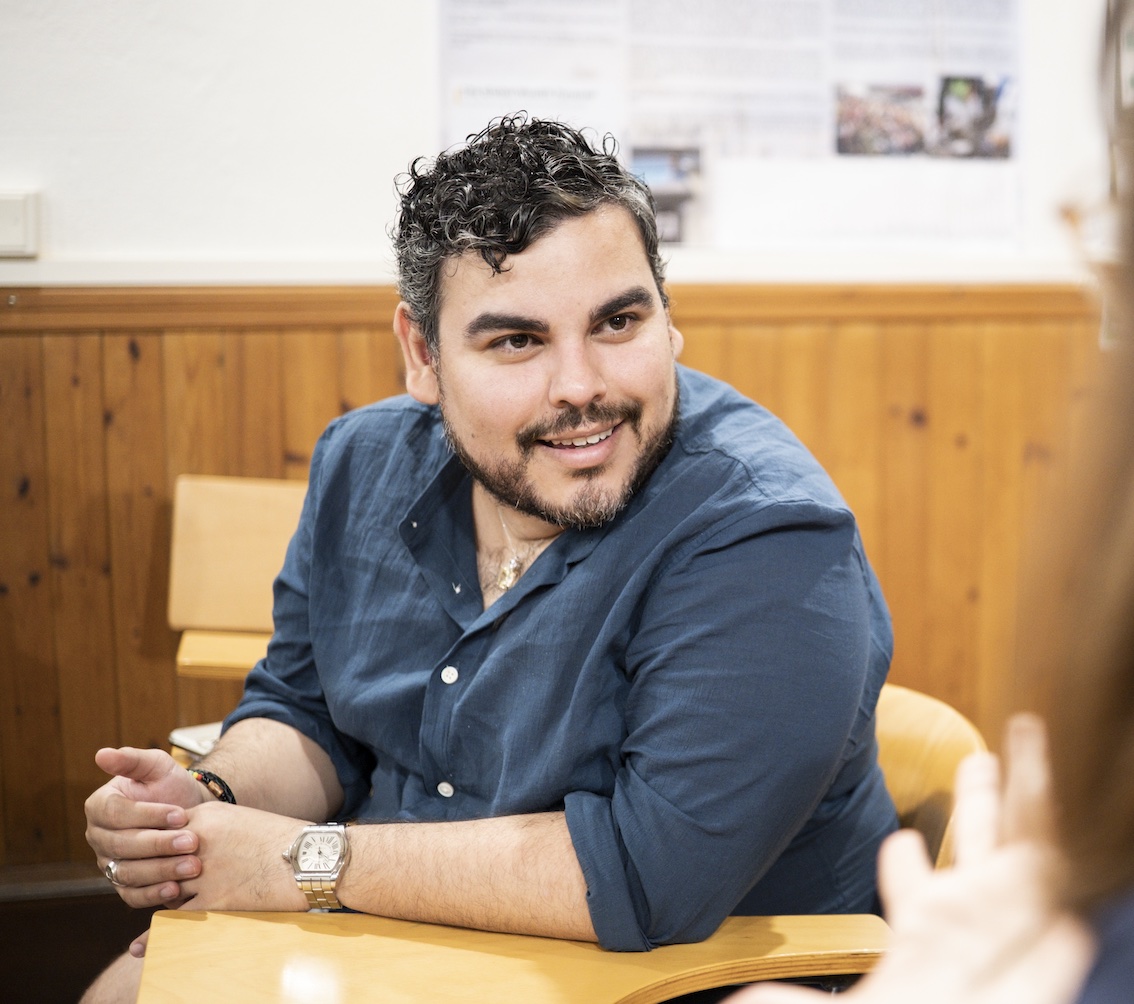
by Alonso de Llanes
The old problem of shared things
Imagine a pasture open to everyone in a village. Each herder can graze as many animals as they like. For each one, adding another cow brings a clear personal gain, while the cost—an overgrazed, ruined field—is shared by all. If everyone follows that logic, the pasture collapses. This is the famous “tragedy of the commons,” described by Garrett Hardin in 1968, and it has shaped how we think about everything from fisheries to the climate ever since.
Hardin’s conclusion was bleak: left to themselves, people will exhaust whatever they share, so the only way out is to privatize the resource or hand it to the state to police. For decades, this assumption framed the debate. We are selfish by nature, the thinking went, and shared goods need a fence or a fine to survive.
But the story turned out to be more hopeful. The political scientist Elinor Ostrom—who later won a Nobel Prize—spent years studying real communities around the world: irrigation networks in Spain, forests in Nepal, fishing grounds in the Philippines. She found that many of them managed their shared resources sustainably for generations, without privatization and without a distant authority forcing them to. They did it through their own agreements: clear limits, shared rules, ways of watching out for cheating, and a real say for everyone involved.
Ostrom’s work was a breakthrough. Yet even she, and most of those who followed, tended to describe cooperation in a particular language—the language of incentives, rules, and self-interest carefully balanced. What they spoke about less was something harder to measure: the inner life of a community. The beliefs, values, and shared sense of meaning that make people want to care for something beyond themselves.
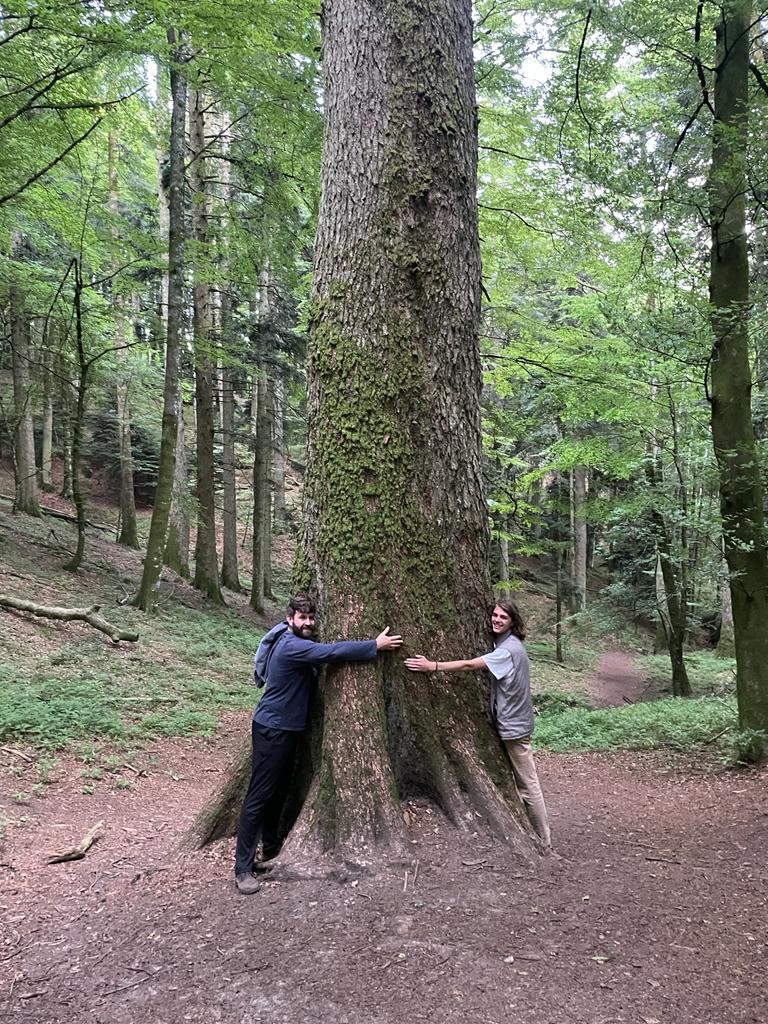
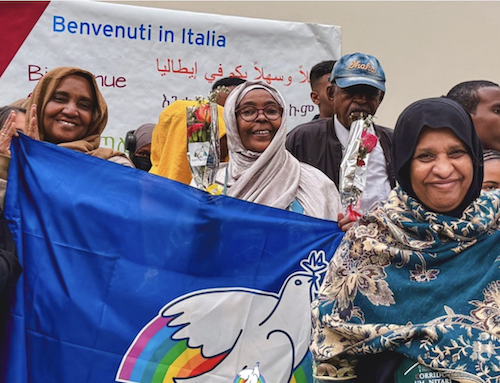
Photo from the EoF Summer School 2023
A different question
My study begins exactly there, in that quieter space. It asks a simple question with deep roots: what if the way a community cares for shared resources depends not only on the rules it sets, but on the kind of people it forms and the story it tells about its place in the world?
To explore this, I drew on a very old idea from the Christian tradition called theosis, sometimes translated as “deification.” It sounds dramatic, but the core insight is gentle. Theosis describes the belief that human beings are made to participate in the life of God—to grow, over a lifetime, into closer communion with the divine, with one another, and with the created world. The early Christian writers summarized it with a striking phrase: God became human so that humans might share in God’s life.
What matters here is the picture of the human person this carries. In much of modern economics, the default human being is homo economicus: a calculating individual who weighs costs and benefits and acts to maximize personal gain. The tradition of theosis suggests a different portrait. The theologian John Zizioulas put it memorably—”being is communion.” On this view, a person is not first an isolated self who later chooses to relate to others, but a being who only becomes fully themselves through relationship. We are made for connection, not just transaction.
I call the framework that grows out of this idea Theotic Governance: a way of understanding the care of shared resources that takes seriously the spiritual and relational formation of the communities doing the caring. Alongside homo economicus, it proposes a companion figure—homo theoticus—a person whose actions are shaped not only by calculation but by communion, service, and a willingness to hold back for the sake of others.
Four pillars
To make this concrete, the framework rests on four ideas drawn from the Christian tradition, each translated into a practical disposition:
- Koinonia (communion): shared responsibility, where decisions about common resources are made together rather than by isolated individuals.
- Agape (self-giving love): care and solidarity oriented toward the good of others, including the poor and future generations, even at a personal cost.
- Diakonia (service): treating the care of creation as a form of service to one’s neighbor, especially the vulnerable.
- Asceticism (self-restraint): a freely chosen sobriety—consuming less, living more simply, respecting limits.
These are not abstract doctrines so much as habits of the heart that, over time, shape how a community sees its world.
What I studied, and what I found
To test whether these dispositions actually show up in practice, I examined real documents from the Laudato Si’ Action Platform, a global initiative of the Vatican’s Dicastery for Integral Human Development that helps Catholic communities and partners take ecological action. The material came from 49 participants across 13 countries—parishes, schools, religious congregations, universities, and families—each of whom had submitted an environmental action plan together with a reflection on why they were doing it. From these, I drew 149 specific passages to analyze closely.
The point was not to count words or produce statistics, but to listen for patterns: how do these communities actually talk about caring for the earth?
The most common theme by far was service. Roughly a third of the passages framed ecological work as a form of care for neighbors—environmental education, sustainable farming, clean-up campaigns, cleaner energy in church buildings—often with special attention to people most exposed to environmental harm. Close behind came love and solidarity, especially concern for the poor and for generations not yet born; many communities spoke of sustainability as an act of love toward people they would never meet. Self-restraint appeared too, in commitments to consume less, waste less, and live more simply—described not as sacrifice for its own sake but as a kind of inner freedom. And communion showed up in how decisions were made: through shared discernment, meetings, and collective deliberation rather than top-down instruction.
In short, these communities did not describe their environmental work as a technical problem to be solved or a rule to be obeyed. They described it as an expression of who they are and what they believe.
Why it matters
Borrowing a term from the sociologist Pierre Bourdieu, I describe this as a kind of habitus—a set of deep, almost instinctive dispositions that quietly guide how people act. What this study suggests is that in religious communities, this habitus is powerfully shaped by spiritual conviction, and that this, in turn, supports the very cooperation that sound resource management requires.
This does not replace Ostrom’s insights or render rules and institutions unnecessary. Good fences and fair agreements still matter. But it adds a missing layer. It suggests that whether shared resources flourish or fail may depend not only on how we design our institutions, but on the kind of people those institutions help us become.
In an age of ecological crisis, that is a quietly hopeful idea. The tragedy of the commons assumed the worst about human nature. This study offers evidence for something more generous: that communities formed by communion, service, love, and restraint can become, in a real sense, keepers of the world they share.
Alonso de Llanes
2025-2026 EoF Academy Fellow