Making Hidden Vulnerabilities Visible: From Multidimensional Child Poverty to Environmental Health Risks
by Isabela Sánchez Vargas
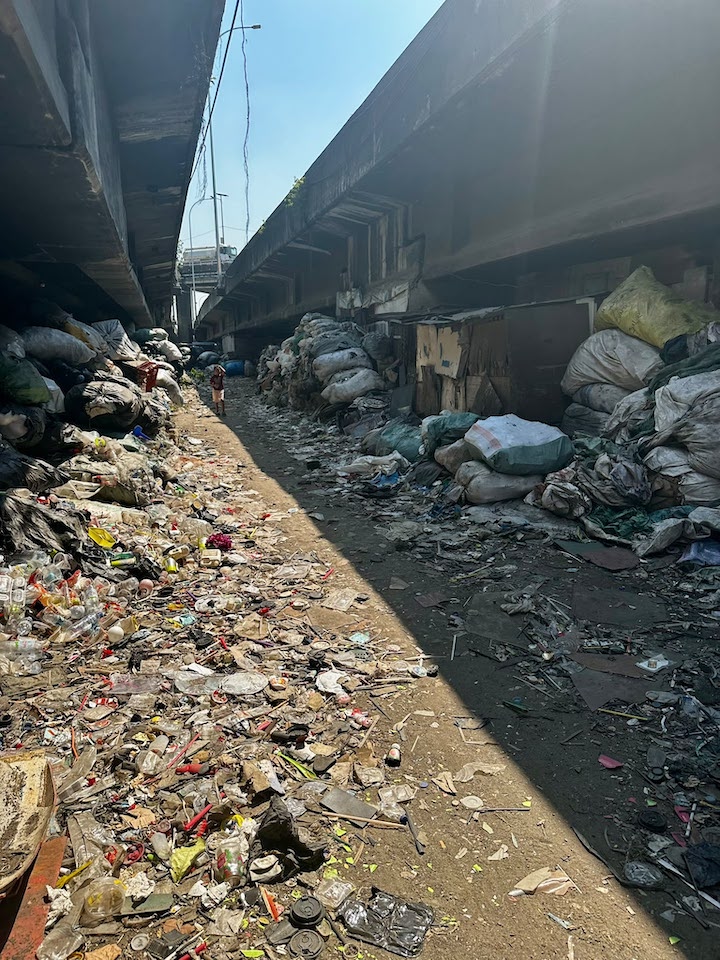
A Jakarta slum. Photo by Ricardo Flores.
For a long time, poverty has been understood mainly in terms of income. Yet many of the factors that shape people’s opportunities remain invisible when we rely exclusively on monetary indicators. Children may grow up exposed to violence, without opportunities for early stimulation, or in environments with limited access to basic services. Likewise, communities may face environmental risks that interact with socioeconomic disadvantages, creating multiple and overlapping forms of vulnerability.
During my time as an Economy of Francesco Academy Research Fellow, I explored these less visible dimensions of well-being through two research projects. Although they addressed different topics (from multidimensional child poverty to the spatial relationship between poverty and dengue risk) they shared the same objective: understanding how different forms of deprivation accumulate and interact, and how this evidence can contribute to more effective and equitable public policies.
This perspective is closely connected to Amartya Sen’s Capability Approach, which understands poverty not simply as a lack of income, but as a deprivation of people’s capabilities, understood as real opportunities to be and do what they have reason to value (Sen, 1999). Rather than focusing solely on the resources people possess, the Capability Approach emphasizes the real freedoms people can achieve and recognizes that personal, social and environmental conversion factors shape how resources are transformed into well-being (Robeyns, 2005).
For children, this perspective is particularly meaningful. As Biggeri and Mehrotra (2011) argue, children’s capabilities differ from those of adults because they are dynamic, strongly dependent on family and social environments, and closely linked to future opportunities. The deprivations experienced during childhood may have long-lasting effects throughout the life course. In the same vein, UNICEF (2005) emphasizes that child poverty cannot be understood solely in material terms, but also through the social, emotional and developmental conditions that shape children’s present and future well-being.
This understanding motivated my research to look beyond conventional poverty indicators and explore dimensions of well-being that often remain overlooked, such as exposure to physical and psychological violence, opportunities for early childhood development, and, more recently, the interaction between socioeconomic deprivation and environmental vulnerability. Together, these studies seek to make visible forms of disadvantage that are essential for understanding, and ultimately expanding, people’s capabilities.
Measuring multidimensional child poverty: Invisible deprivations during childhood
My first research project explored multidimensional child poverty in Argentina, Paraguay and Uruguay. Although income poverty remains an important indicator, a child may live above the monetary poverty line while still facing serious disadvantages that affect their development, such as inadequate housing conditions, lack of access to safe water and sanitation, exposure to physical or psychological violence, or insufficient opportunities for early childhood stimulation.
Building on the Capability Approach, this research adopted a multidimensional perspective to better reflect children’s well-being. The analysis focused on children aged 0–4 years using data from UNICEF’s Multiple Indicator Cluster Surveys (MICS) and applied the Alkire and Foster (2011) methodology to identify multidimensional poverty across five dimensions: housing, water and sanitation, education, child development, and child discipline.
One of the main findings was that multidimensional poverty extends well beyond material deprivation. Indicators related to violent discipline and early childhood development revealed forms of vulnerability that are rarely included in official poverty statistics, despite their potential long-term consequences for children’s capabilities. At the same time, the study showed important differences across countries and between population groups, highlighting the particular disadvantages faced by children living in rural areas and informal settlements.
These findings suggest that reducing child poverty requires more than increasing household income. Policies that improve access to basic services remain essential, but they should also strengthen nurturing environments, protect children from violence, and promote opportunities for early childhood development. Expanding children’s capabilities means ensuring that they can grow up in environments that support their physical, cognitive and emotional development from the earliest years of life.
When poverty meets dengue environmental risks: Analyzing overlapping vulnerabilities
My second research project examined the spatial interaction between poverty and environmental health risks. Dengue is the world’s fastest-growing arboviral disease, and its expansion has been associated with climate change, rapid urbanization, greater human mobility, and inadequate urban infrastructure, particularly in low- and middle-income countries (Cofone et al., 2025). Yet, despite the biological plausibility of a link between poverty and dengue, the empirical evidence remains heterogeneous and highly context-dependent (Smith, 2025).
The central question was whether dengue can also be understood as a disease of poverty. Rather than treating health and poverty as separate issues, I examined whether multidimensional poverty and environmental dengue risk tend to cluster geographically across Argentine localities, and whether neighboring territories influence each other through spatial spillover effects.
Using a multidimensional poverty index estimated from the 2022 Population Census following the Alkire-Foster methodology together with the CONAE Environmental Dengue Risk Index, the study explored the relationship between socioeconomic deprivation and environmental suitability for dengue risk across Argentine localities.
The findings revealed a clear spatial overlap between environmental and socioeconomic vulnerabilities. High-risk localities were more likely to be embedded within poorer surrounding territories, forming clusters of compounded vulnerability, particularly in northern Argentina. Moreover, the analysis showed that the association between poverty and environmental dengue risk operates predominantly through spatial spillover effects, indicating that the socioeconomic conditions of neighboring localities matter as much as those of the locality itself.
These results suggest that reducing dengue risk requires more than strengthening health systems or implementing isolated vector-control measures. They highlight the importance of territorial strategies that simultaneously improve housing, sanitation, urban infrastructure, and broader living conditions, especially in hotspot regions where environmental conditions of neighboring localities influence one another. Rather than treating localities as isolated units, public policies should recognize that vulnerability extends across territories and therefore calls for coordinated regional interventions.
Concluding reflections
My experience at the Economy of Francesco Academy reinforced my conviction that economics has an important role to play in broadening our understanding of well-being. The Capability Approach provided a common framework linking both projects and encouraged me to look beyond income to understand the real opportunities people have to lead healthy, safe, and dignified lives.
The two projects also showed me that poverty is not only multidimensional but often spatially interconnected. Deprivations can accumulate within individuals and households, but they can also extend across communities and territories. Making these patterns visible is therefore an important step toward designing policies that address the multiple dimensions of disadvantage rather than treating them as isolated problems.
I hope to continue developing this research agenda by producing evidence that supports more integrated public policies and contributes to building societies where every child and every community has the opportunity to flourish.
—
References
Alkire, S., & Foster, J. (2011). Counting and multidimensional poverty measurement. Journal of Public Economics, 95(7–8), 476–487.
Biggeri, M., & Mehrotra, S. (2011). Child poverty as capability deprivation: How to choose domains of child well-being and poverty. In A. Minujin & S. Nandy (Eds.), Global child poverty and well-being: Measurement, concepts, policy and action (pp. 53–76). Policy Press.
Cofone, L., Sabato, M., Di Paolo, C., Di Giovanni, S., Donato, M. A., & Paglione, L. (2025). Urban, architectural, and socioeconomic factors contributing to the concentration of potential arbovirus vectors and arbovirosis in urban environments from a One Health perspective: A systematic review. Sustainability, 17(9), 4077.
Robeyns, I. (2005). The capability approach: A theoretical survey. Journal of Human Development, 6(1), 93–117.
Sen, A. (1999). Development as freedom. Oxford University Press.
Smith, J. (2025). Dengue and its correlation to poverty: A scoping review. South Florida Journal of Health, 6(2), e5123.
UNICEF (2005). Child poverty in rich countries 2005. Innocenti Report Card No. 6. UNICEF Innocenti Research Centre.
Isabela Sánchez Vargas
She is an economist whose research focuses on human development, multidimensional poverty, inequality, and spatial analysis. She is a PhD candidate in Economics at Pontificia Universidad Católica Argentina (UCA), Research Fellow at the National Scientific and Technical Research Council (CONICET) and Professor at the National University of Misiones (UNaM). She holds a Master’s degree in Economics from the University of Buenos Aires (UBA). Her research combines economic theory and empirical methods to explore how social, economic, and territorial conditions shape people’s opportunities and well-being, with a particular interest in poverty measurement and territorial development. 2025–2026 EoF Academy Fellow.