Labor Quality and the Green Industry: The Path to a Just Transition in Brazil
by Tatiana Vasconcelos Fleming Machado
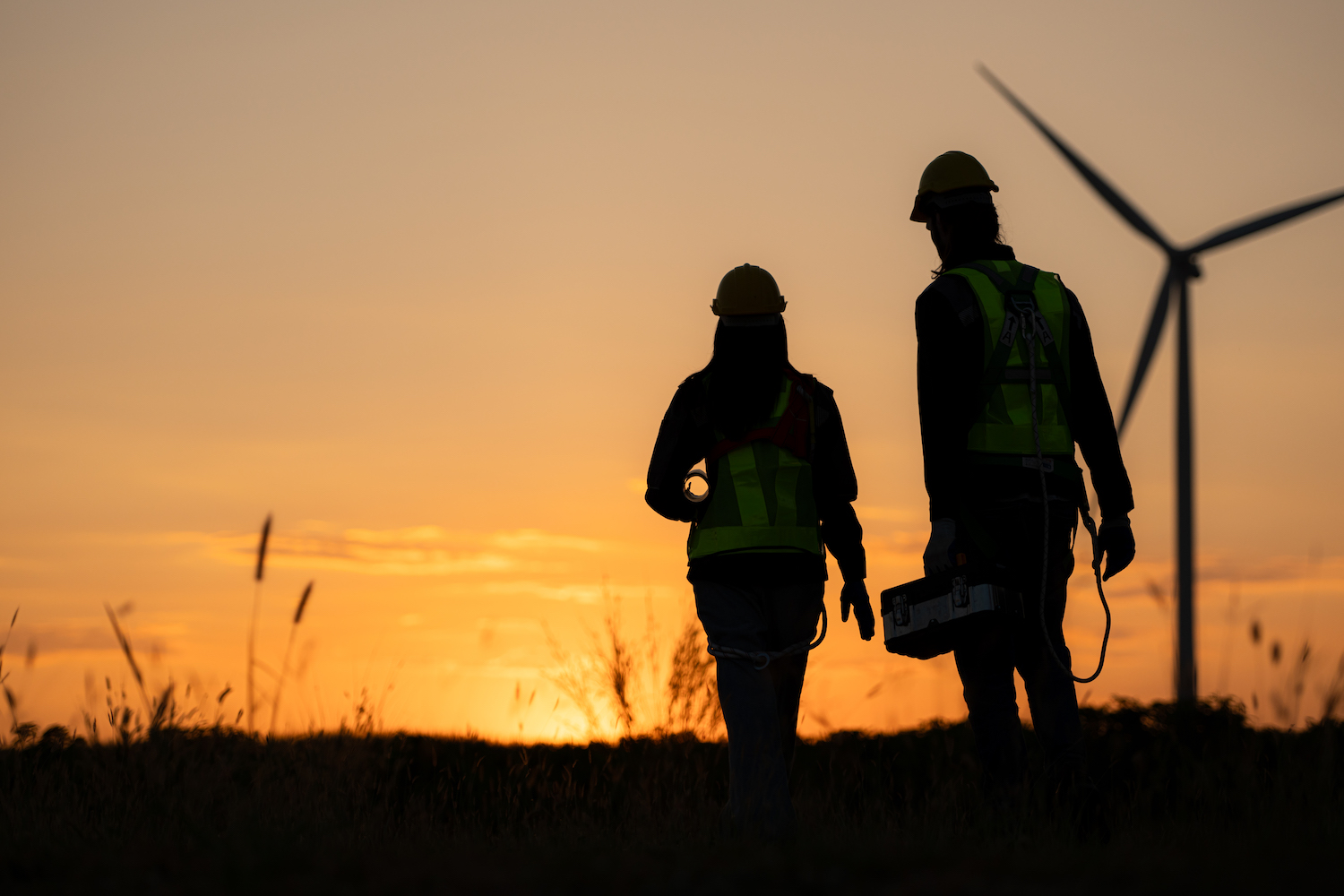
The global climate crisis requires not only new technologies but also a deep reflection on who drives the economy: the worker. In Brazil, the debate on a “just transition” is gaining momentum as a strategy to ensure that the shift to a low-carbon economy results in the creation of decent, quality jobs, particularly protecting the most vulnerable workers. To inform this debate, the present study analyzes how job quality in Brazilian industry evolved between 2012 and 2023 and what challenges remain for this environmental transition to be genuinely socially just.
What is Labor Quality?
Defining “labor quality” may seem subjective, but researchers use two main lenses to measure it. The first is the objective approach, which focuses on “human capital”, the stock of knowledge, years of schooling, and experience a worker possesses (Hall, 1989).
Added to the objective view is the concept of quality of job, which includes factors such as income and job security (Leontaridi & Sloane 2000). The second is the subjective approach, known as Quality of Work Life (QWL) or quality of work, which involves the worker’s perception of their well‑being, health, safety, and satisfaction in the workplace (Chiavenato, 2004).
The study highlights that, although knowledge (education) is the long‑term engine of development, Brazil faces a persistent mismatch: often, qualified workers end up in jobs that do not require their full skills, while poor quality in the basic education system limits the country’s growth potential.
The Current Scenario: Stagnant Productivity and Declining Quality
Although industry is the sector that creates the most formal jobs and provides workers with dignity and protections (Rossi, 2024), the data reveal a worrying picture for Brazilian industry. Labor and job quality in Brazilian industry has been falling historically, and more sharply than labor productivity itself.
Traditional sectors such as food, beverages, and transportation equipment manufacturing recorded declines in both productivity and job quality. Even highly productive sectors, like fuels and petroleum derivatives, saw job quality drop significantly during the study period (2012–2023).
While productivity in many sectors has remained practically stagnant or shown only meager growth over the past 40 years, qualification levels have declined across all industrial sectors analyzed. One possible explanation for this poor quality outcome is not education (which has seen an increase in workers with higher education degrees) but factors related to quality of job and a possible migration of workers from industry to services.
The increase in service employment in Brazil (2014–2019) was driven by growth in the number of self-employed and informal workers. This phenomenon creates a false impression of structural transformation, while it actually increases worker precariousness and does not generate real growth in income or output (Baltar; Dweck; Marcato; Krepsky, 2025).
This phenomenon is not observed only in Brazil. Rodrik and Stiglitz (2024) show that cases of countries that recorded growth in industrial employment in recent years are rare. Moreover, the jobs created were concentrated in small, informal, low-productivity firms.
The Impact of Informality and the Weight of Formal Employment (CLT)
One of the study’s central points is the relationship between the employment regime and labor quality. Statistical analysis confirmed that informality degrades work. For each increase in the level of informality, job quality falls by about 21.46%.
Informality in Brazil rose from 45% to over 50% between 2015 and 2022, increasing workers’ vulnerability. This demonstrates a rise in long-term insecurity and vulnerability for workers.
On the other hand, formal employment under the CLT is associated with a 22.68% increase in job quality. This occurs because formalization offers greater stability, social protection, and benefits that directly affect worker well-being.
The phenomenon of “uberization” and the rise of necessity-driven self-employment is cited as a factor that creates a false sense of structural transformation, while actually masking underemployment and a lack of economic dynamism.
Climate Transition as an Opportunity
Despite the challenges, the need to decarbonize industry offers a path for Brazil to reinvent itself. The so-called “green industry” (focused on products and processes that reduce environmental impact) tends to be more knowledge and capital-intensive. Industrial policies that encourage clean technologies can be the engine to raise job quality (Rodrik & Stiglitz, 2024).
However, for this transition to be “just,” it cannot focus solely on machines; it requires massive investments in education and in formalizing the labor market.
Conclusion
The study concludes that a just transition in Brazil is a historic opportunity to overcome structural bottlenecks, such as low educational attainment and high informality. For Brazilian industry to return to sustainable growth, it is essential that climate policies go hand in hand with valuing workers. Ensuring decent jobs and investing in real skills development are the only ways for the “green revolution” not to leave a large share of Brazilian workers behind.
References
BALTAR, C. T.; DWECK, E.; MARCATO, M. B.; KREPSKY, C. U. Beyond Informal Employment: Stagnation and Disguised Employment in Brazil. Structural Change and Economic Dynamics, 2025.
CHIAVENATO, I. Gestão de pessoas. 2. ed. Rio de Janeiro: Campus, 2004.
HALL, Robert E. Invariance properties of Solow’s productivity residual. 1989.
LEONTARIDI, R.; SLOANE, P. Measuring the quality of jobs: Promotion aspects, career and job satisfaction, Centre for European Labour Market Research, University of Aberdeen, 2000.
RODRIK D, STIGLITZ, JE. A New Growth Strategy for Developing Nations. Harvard University, 2024.
ROSSI, P. Brasil em disputa: Uma nova história econômica do Brasil. Crítica, 2024.
Tatiana Vasconcelos Fleming Machado
PhD candidate in Economics at the Federal University of Rio de Janeiro and research assistant at the Industry and Competitiveness Group (GIC‑IE/UFRJ); member of the Economy of Francesco since 2019; MSc in Economic Development from the Institute of Economics, State University of Campinas (DeepMind scholar); BA in Economics from the Federal University of Juiz de Fora (UFJF), with an exchange period at the University of Évora, Portugal (DRI/UFJF scholar); postgraduate specialization (lato sensu) in Business Intelligence from the Pontifical Catholic University of Rio de Janeiro (PUC‑Rio).
2025-2026 EoF Academy Fellow