
At the Roots of Economic Ethics is a two-day international academic conference on the ethical, spiritual, ecological, and social dimensions of economic thought, inspired by Franciscan traditions.
To mark the 800th anniversary of St. Francis of Assisi’s death, The Economy of Francesco Foundation is hosting a two-day academic conference at the Serafico in Assisi. This venue reflects the Franciscan ideals of care, inclusion, and love for the creation. The conference aims to bring together scholars, researchers, and practitioners from economics and related fields, with a special emphasis on approaches inspired by the life, teachings, and charism of St. Francis. He was a man who saw every creature, human and non-human, as a brother or sister sharing the same gift of life.
The conference aims to foster interdisciplinary dialogue on the ethical, spiritual, ecological, and social aspects of economic thought. It examines how Franciscan principles can impact contemporary research and practice across various fields, including economics, social sciences, theology, and others. In the spirit of The Economy of Francesco, the discussion will reflect on an economy of relationships where the poor and the vulnerable, along with the Earth and all living beings, which are often marginalized in mainstream economic theory and practice, share in the same call to dignity and flourishing.
PROGRAM
7 May | Pre-Conference
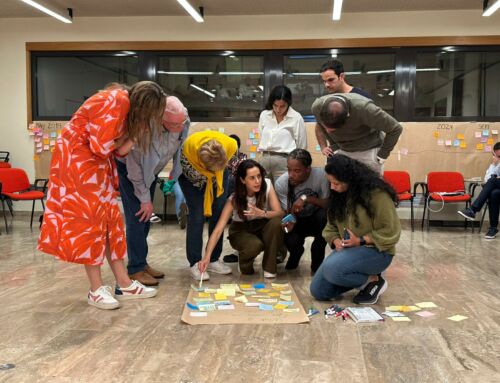
EoF Academy Workshop
On May 7, a dedicated pre-conference workshop will be organized for researchers affiliated with the Economy of Francesco Academy. Academy members will present research projects developed as part of their academic journey and in their final year, focusing on their own research themes, which may not necessarily align with the main topic of the conference. The workshop aims to foster scholarly exchange and mentorship. While primarily intended for Academy researchers and supervisors, the session will be open to interested participants wishing to attend as observers.
Participation in the pre-conference workshop is subject to the same registration procedures, fees, and eligibility criteria outlined above.
8:30 – 9:30 | Registration
Conference Hall (floor 3)
9:30 – 11:00 | Welcome words – Poster Session by EoF Academy Fellows
Engaging with ongoing research and dialogue with EoF Academy Fellows.
11:00 – 11:30 | Coffee break
11:30 – 12:30 | Celebrating the journey of the Academy Fellows
13:00 – 14:00 | Light lunch
14:00 – 15:30 | Co-creating together Workshops
15:30 – 16:00 | Break
16:00 – 17:00 | Concluding moment
17:00 | Spiritual and cultural visit in Assisi
Walking distance – An experience of place, connecting reflection with the Franciscan context.
8 May | Main Conference | Day 1
8:30 – 9:00 | Registration
Conference Hall (floor 3)
9:00 – 10:30 | Welcome words by Francesca Di Maolo
Keynote Lecture: Helen Alford
What can Homo Mendicans offer to Economic Thought?
10:30 – 11:00 | Coffee break
11:00 – 13:00 | Parallel Sessions A
Interdisciplinary contributions from scholars and practitioners across different fields.
A1 – Conference Hall (floor 3)
Poverty, Inequality and Human Development I
Poverty under Systems Theory: A Historical, Relational, and Interdisciplinary Analysis of the Welfare and Income Guarantee System in Spain — José María Larrú (Faculty of Economics and Business, Universidad San Pablo-CEU, CEU Universities)
Discredit, Epistemic Injustice and Poverty — Bruno Tardieu (ATD Fourth World, Joseph Wresinski Archive and Research Center)
Dilexi te (Leo XIV) and the Dialogue Between Theology and Social Sciences on Poverty — Cristian Hodge (Pontificia Universidad Católica de Chile)
The Relational Economy: Fraternity with the Poor — Michael Ambrosi (University of Trier)
Decency and Employee Ownership — Tony Guidotti, Nien-hê Hsieh (Harvard Business School)
A2 – Sala Riunioni (floor 3)
Household, Work, and Leadership
Relational Capital and Labour — Alessio Emanuele Biondo (University of Catania), Marcello Signorelli (University of Perugia)
A Career Success Model for Low-Status Split-Family Self-Initiated Expatriates — Caren Rodrigues, Anup Krishnamurthy (St. Joseph’s Institute of Management)
When Performance Is Measured but Meaning Is Not: Tacit Leadership and the Hidden Trade-offs of Organizational Life — Igor Perkon (Ateneo Pontificio Regina Apostolorum)
Good Debt, Bad Debt: How Paid Family Leave Shapes Intra-Household Borrowing After Childbirth — Tracey Freiberg (St. John’s University), Ning Li (Salisbury University in Maryland)
From Ethical Vision to Measurable Impact — Antonio Potenza (University of Oxford, Proodos), Gabriel Flores, Phyllis SantaMaria (Learning without Borders, InnoViva Tech, Proodos )
A3 – Teatro (floor 2)
Franciscan Thought and Economic Tradition I
Franciscan Charism as a Path toward the Universal Destination of Goods — Bruno Petrušić (EoF Academy)
The Franciscan Roots of Contractual Justice — Francesco Scaglione (University of Perugia)
Alessandro Manzoni on Utilitarianism — Stefano Colombo (Università Cattolica del Sacro Cuore)
Il ruolo dei Monti di Pietà nel progetto francescano di società cristiana fra XV e XVI secolo — Paola Pinelli (University of Firenze)
A4 – Sala Artigianato (floor 2)
Behaviour, Finance and Measurement
From Individual Literacy to Relational Capability. Evidence from Financial Education Programs in OECD Countries — Eliana Canavesio (European University Institute)
Neuroscientific Foundations of Narrative Capital: Evidence from Consumer EEG Research — Cristina Maria de Aguiar Pastore, Eliane Cristine Francisco-Maffezzolli (PUCPR)
Religion, Resilience and Wellbeing: An Empirical Analysis for Italian Regions — Sara Balestri, Marcello Signorelli (University of Perugia), Luigi Aldieri (University of Salerno), Luca Esposito (University of Foggia)
Why Should Inequality Matter? An Ethical Evaluation from a Human Development Perspective — Juan Carlos Mantilla (Universidad Autónoma de Bucaramanga UNAB)
13:00 – 14:00 | Light lunch
Conference Hall (floor 3)
14:00 – 14:30 | Words from Bishop Felice Accrocca
14:30 – 16:30 | Parallel Sessions B
B1 – Conference Hall (floor 3)
Wealth, Human Development, and Migration
For a New Vision of Integral Human Development: Towards Homo Integralis — Mario Biggeri (University of Firenze)
Beyond Remittances: OFW Migration, Families Left Behind, and Human Flourishing — Diana Rueda (University of Asia & the Pacific)
How to Judge Wealth in the New Gilded Age — Philip Thompson (Marian University)
Economy of Francesco and the Migration Crisis: Old and New Challenges and Perspectives — Ingrid Basaldúa (National Catholic Council for Hispanic Ministry United States of America, Church Management Program – Catholic University of America, EoF Village Life and Lifestyle), Klaus Raupp, PhD. (EoF Academy, EoF Village Life and Lifestyle)
B2 – Sala Riunioni (floor 3)
Ecology, Policy and Regeneration
Political Ontologies of Seed Savers as a Base for Agroecology Policies — David Caicedo Sarralde (University of Helsinki)
Oltre il paradigma tecnocratico: l’ecologia integrale per un diritto giusto — Paolo Facciotti (University of Napoli Parthenope)
From Monetary Value to Environmental and Social Justice to Regenerative Value — Domenico Vito (Regg3)
Organizing Collective Action for Sufficiency in Community-Based Organizations — Tamas Veress (Corvinus University of Budapest)
For a New Vision of Integral Human Development: Integral Ecology and Policy Implications — Giulio Guarini (University of Tuscia)
B3 – Teatro (floor 2)
History of Economic Thought and Franciscan Tradition II
The Usury Dilemma. Trade and Trust in Credit and Usury in “Il Negotiante” — Giulia Angelucci (LUMSA University)
Genovesi on Labor — Beatriz Simon-Yarza (University of Navarra)
Cities and the Common Good: Historical Roots of Economic Ethics — Ana Rosa Chagas Cavalcanti (University of São Paulo)
Balancing Excellence and Diversity in Economics — Valentina Erasmo (University of Turin)
B4 – Sala Artigianato (floor 2)
Social Economy, Cooperation and Development
Church Support for a New Co-Operative Economy in Dublin — Sophie Manaeva (Jesuit Centre for Faith and Justice)
Franciscan-Inspired Social Entrepreneurship in Bangladesh — Arafatul Islam (Startup Chattogram)
Identifying Social Purpose in Multinational Enterprises — Juan Carlos Mondragon Quintana (University of Bristol)
16:30 – 16:50 | Break
Conference Hall (floor 3)
16:50 – 18:00 | Keynote Lecture: Luigino Bruni
The Paradoxes of Francesco’s Poverty
18:00 – 19:45 | Walk to Pro Civitate Christiana – Cittadella Laudato si’
Visit to the art exhibition, with a brief presentation of the venue
20:00 | Social Dinner at the same venue
9 May | Main Conference | Day 2
Conference Hall (floor 3)
9:00 – 10:10 | Keynote Lecture: Giacomo Todeschini
Wealth, Poverty, and Inequality. Franciscan Economics of Limited Use and the Sacred Value of Persons and Things
10:10 – 10:30 | Coffee break
10:30 – 12:30 | Parallel Sessions C
C1 – Conference Hall (floor 3)
Theology, Ethics and Economy
Economia como locus teológico — Vitor César Zille Noronha (Faculdade Jesuíta de Teologia e Filosofia do Brasil, Pontificia Accademia Alfonsiana)
For a Dialogical Ethics: From the Example of Francis — Federico Masciotti
Autonomy, Social Choice, and Solidarity: A Path from Theology to the Economy of Francesco — Henrique Souza (University La Salle)
Theotic Governance and the Ecumenical Administration of the Commons — Alonso de Llanes Garcia (University Paris-Saclay)
Beyond Profit: Comparative Analysis of Christian Value-Oriented Models — Ildikó Luspayné Balla (Corvinus University of Budapest)
C2 – Sala Riunioni (floor 3)
Markets, Finance and Economic Ethics
Prices and Fraternity: A Relational Theory of Market Valuation — Vincenzo Alfano (University of Napoli Parthenope)
Market Failures and Fraternity — Gherardo Girardi (St. Mary’s University)
The FX Tribute / GFA Model Global Formulary Apportionment — Gerhard Vorwold (Bridging Gaps – Prof. Vorwold Stiftung)
The Morality of Public Debt: An Institutional Economics Perspective — Marco Bevilacqua (University of Tuscia)
C3 – Teatro (floor 2)
Integral Ecology and Sustainability
Thriving at Nature’s Pace — David Ko (Rethinking Choices)
An Ecological Perspective in Food Science — Carlo Avignolo (UNITRE)
Integral Ecology as Franciscan Economic Witness — Ivan Efreaim Gozum (University of Santo Tomas)
Agrivoltaics as an Ethical Economic Practice — Alessandra Scognamiglio (ENEA – AIAS)
Poverty as Knowledge: Franciscan Epistemology and Integral Ecology in IPE Education — Elena Šiaudvytienė (LCC International University)
C4 – Sala Artigianato (floor 2)
Institutions, Governance and Global Justice
Ethical-Institutional Pathways to Inclusion — Jorge Cardich (University of San Ignacio de Loyola)
Reconciliation and Justice: A Christian Perspective on Alternative Dispute Resolution — Daniele Lonardo (UCID Piemonte, EoF HUB Piemonte, UNIAPAC Youth Group)
Relational Approaches to Forced Labor Remediation — Charles Niece (Maryknoll Fathers and Brothers)
12:30 – 13:30 | Light lunch
13:30 – 15:30 | Parallel Sessions D
D1 – Conference Hall (floor 3)
Anthropology, Meaning and Human Flourishing
Ripensare l’umano per ripensare l’economia: il “nuovo ADAM” come paradigma antropologico per un’impresa in cui c’è sempre dell’altro da esplorare — Silvana Carcano (Ethycon Società Benefit)
L’economia del futuro non avrà più come problema la scarsità, ma il senso — Stefano De Togni (Fondazione Arcangelo Gabriele)
Complexity Science and the Christian Message at the Roots of Economic Ethics — Pier Luigi Gentili, Marcello Signorelli (University of Perugia)
Sumak Kawsay. The path towards Universal Health — Francisco Javier Valbuena Ruiz (Fundación Pondera Global)
Relation to Death and Nature: At the Roots of Right Relations to the Earth Community. — Jennifer Nedelsky (University of Toronto)
D2 – Sala Riunioni (floor 3)
Interreligious Dialogue and Culture
The Encounter between Saint Francis and the Sultan — Cristina Montesi (University of Perugia)
Interreligious Dialogue and Intercultural Mediation — Olena Komisarenko (EoF Academy)
Art and the Economic Imagination of St. Francis — Clarins Shieryl (University of Oxford – Blackfriars Hall)
Lekil Kuxlejal and Integral Flourishing — Jesús Becerril-González (Universidad Iberoamericana)
D3 – Teatro (floor 2)
Franciscan Economic Tradition II
The Vision of a Christian Economy — Knut Johannessen Ims (Norwegian School of Economics)
The Palimpsest of the Popes — André Lapidus (University Paris 1 Panthéon-Sorbonne)
No System Can Replace Virtue — Luciano Falcinelli (University of Buenos Aires)
Franciscan Pedagogy for Systemic Change – Heather Cetrangolo (Systemic Renewal)
D4 – Sala Artigianato (floor 2)
Care, Inclusion and Social Ethics
Inclusion, Disability, and the Economy of Care: Learning from St. Francis — Nicolye Mondle (TeenRosa Mentoria & Consultoria)
Measuring What Truly Matters — Céline Nabintu Nyamwaba, Augustin Mathias (Medical Center Hamburg)
The Values and Ideas Behind the Development of a Care Economy in Latin America: Mexico as a Case Study Towards a Relational Model — Ana Paula Pérez (University of York)
The Economics of Harm Reduction. An Ethical Approach — Nishita Dsouza (University of North Florida)
15:30 – 15:45 | Break
Conference Hall (floor 3)
15:45 – 16:30 | Plenary Session: Emeritus Bishop Domenico Sorrentino
From the Prophecy of Francis to the Lesson of Toniolo: The Economy of the Saints
16:30 – 17:00 | Closing remarks and final conclusions
—
Scientific Committee
Leonardo Becchetti (Tor Vergata University – Rome); Luigino Bruni (LUMSA); Valentina Erasmo (University of Turin); Maria Jordet (University of Inland Norway); Jennifer Nedelsky (University of Toronto); Matteo Rizzolli (LUMSA); Caren Rodrigues (St. Joseph’s Institute of Management); Valentina Rotondi (SUPSI); Paolo Santori (Tilburg University); Marcello Signorelli (University of Perugia).
Venue
Serafico di Assisi
Viale Guglielmo Marconi, 6, 06081 – Assisi PG (Italy)
Information and Contact
For further information regarding submissions, participation, or registration, please contact:
[email protected]
Organizing Institutions
EoF Foundation – The Economy of Francesco Foundation
HEIRS – Happiness Economics and Interpersonal Relations
WITH THE SUPPORT OF


Key Dates
The following key dates apply to submissions and participation in both the pre-conference workshop and the main conference.
- Abstract submission deadline: January 28
- Notification of acceptance: February 18
- Registration Opens: February 18
- Registration deadline (for presenters and attendees): March 30
- Pre-conference: 7 May
- Conference: 8-9 May
Authors will be notified of the outcome of the review process by February 18.
Upon acceptance, at least one author of each accepted paper must register for the conference as a presenter by March 30. Papers whose authors have not completed registration by this date will not be included in the final program.
Participation without Paper
The conference welcomes attendees who are not presenting papers. Researchers, students, and professionals with an interest in the conference themes are encouraged to join.
Participation includes:
- access to all conference sessions
- participation in discussions and Q&A sessions
- certificate of participation
REGISTRATION and PAYMENT
Registration fees and participation conditions apply equally to presenters and attendees participating in both the pre-conference workshop and the main conference.
Conference participation is subject to the following registration fees:
- Students, PhD candidates, and early-career researchers: €150
- Faculty & Senior Researchers: €250
These differentiated fees reflect our commitment to fostering academic solidarity and supporting the participation of students and early-career researchers.
Participants who wish to further support the conference and its initiatives may opt for the Supporter Fee. This additional support helps uphold the quality of the event and, in a spirit of academic solidarity, facilitates the participation of scholars and attendees with limited financial resources.
- SUPPORTER Fee: €350
The registration fee includes conference materials, proceedings, coffee breaks, and lunches, and one dinner on May 8.
Please note that accommodation is not included and must be arranged independently by participants. Assisi offers many options, but we recommend booking as early as possible given this time of year.
—
To participate, please complete and submit the form below, then proceed with the payment of the registration fee.
Please note that REGISTRATION WILL ONLY BE CONFIRMED AFTER PAYMENT OF THE REGISTRATION FEE.
PAYMENT METHODS:
By Bank Transfer
- Important: Please indicate the following payment reference:
First Name Last Name – Conference Registration May 2026
- Bank Details
Account Holder: FONDAZIONE THE ECONOMY OF FRANCESCO
IBAN: IT51N0887138281005000121553
BIC: CCRTIT2TSBE
Account Number: 05/000121553
Bank: Banca di Credito Cooperativo di Spello e del Velino
Branch Address: Via Sandro Pertini, 109/111, Bastia Umbra, 06083 (PG), Italy
- Please send the payment receipt to: [email protected]
OR
by Credit Card
- Go to: https://francescoeconomy.org/support-the-community/
- In the “DONATE BY CARD” section
- Click “Other” and enter the amount
- In the field “Reason for the Donation”, enter:
First Name Last Name – Conference Registration May 2026 - Proceed with the payment as instructed
- Send a confirmation screenshot to: [email protected]
Registration Deadline: March 30, 2026
[CLICK HERE FOR THE REGISTRATION FORM]
—
CANCELLATION POLICY:
Partial refunds (50% of the total participation fee) will be granted only for cancellations communicated via email to [email protected], with subject: Conference May 2026 – CANCELLATION OF PARTICIPATION, by April 15, 2026.
After this date, refunds cannot be guaranteed, except in exceptional cases, subject to individual evaluation by the organization.
SCHOLARSHIPS
A limited number of full or partial scholarships (fee waivers) are available. Priority will be given to authors whose papers are accepted through the Call for Papers.
To proceed with your request, please download the PDF file below and read the instructions carefully. Then access the application form using the link provided in the document.
TYPES OF SCHOLARSHIP
Participation Scholarship: Covers the participation fee only. This scholarship grants free access to the conference; accommodation and any other expenses remain the responsibility of the participant.
Travel Scholarship: Covers part of the travel costs. Reimbursement will be made by bank transfer after the event, upon submission of valid travel receipts.
IMPORTANT DATES
- Application deadline: March 3
- March 9: the outcomes of the requests have been sent to all applicants. If you have not received any email, please write to [email protected]
IMPORTANT NOTES
- If you are unable to travel, please inform us promptly at [email protected]. Generally, in such cases, the scholarship will not be awarded. However, we are open to reviewing each situation individually.
- No additional financial support or subsidies are available.
- Scholarships will be awarded on a rolling basis until all funds are allocated. Early application is strongly recommended. Decisions of the selection committee are final and not subject to appeal.
[Download the scholarship document in PDF format]
The Call for Papers is now closed. We received a high number of submissions and thank all authors for their interest.
CALL FOR PAPERS (Closed)
We invite submissions that address, but are not limited to, the following themes:
- Franciscan perspectives on economic theory, policy, and practice
- Ethical, spiritual, ecological, and moral dimensions of economic life
- Historical and contemporary interpretations of Franciscan-inspired economics
- Interdisciplinary approaches linking Franciscan thought with philosophy, theology, and the social and natural sciences
- Inclusion, disability, and the economy of care: new paradigms of human and social flourishing
- Innovative research on the implementation of Franciscan principles in modern economic systems, communities, and institutions
- The relational economy: fraternity with the poor, with the Earth, and with all creatures
- Franciscan influences within Catholic Social Teaching and global movements for justice and peace
- Global and regional economic dynamics and geopolitical instabilities: old and new challenges and perspectives
- Cultural and contextual reinterpretations of Franciscan-inspired economics in regions with limited Franciscan presence
This conference represents a unique opportunity to engage with a growing community of scholars exploring the intersection of economics, creation, and Franciscan thought, reflecting on the enduring relevance of St. Francis’ vision — a vision of peace, poverty, and fraternity that invites everyone to build an economy where no one is excluded, and all of creation can flourish.
Submission Guidelines
Scholars interested in participating are invited to submit a curriculum and an abstract of no more than 200 words to [email protected] by January 28. Abstracts should clearly outline the research question, methodology, and relevance to the conference themes.
All submissions will be reviewed by the Scientific Committee. Selected contributions will be considered for presentation during the conference sessions, which will take place on-site.
If you wish to participate in the pre-conference workshop, please specify this in your submission email.
The submission guidelines, review process, registration requirements, and participation fees apply to both the pre-conference workshop and the main conference, unless otherwise specified.