What Fraternity Taught Me in Germany
by Nicolye Durão Mondle – published in Avvenire on October 14, 2026
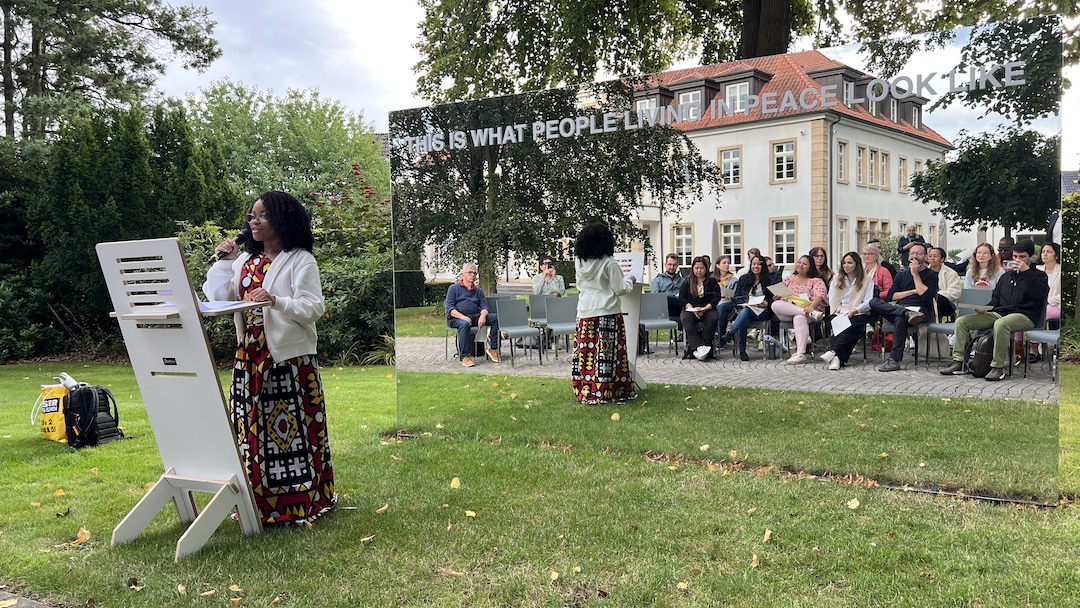
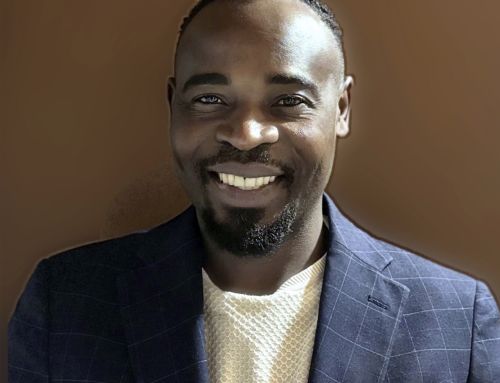
I was the youngest person at the International Summer School of the Economy of Francesco in Germany. Around me were economists, researchers, entrepreneurs, academics and professionals with years of experience, coming from 26 different nationalities and from every corner of the world. I was there as a teenager from Mozambique in Africa, listening, observing, learning and sometimes simply taking everything in. At first, the age difference felt huge. But very quickly, I understood that being young did not mean I had nothing to bring. I was carrying Mozambique with me, its people, its challenges, its hopes and a way of seeing the world shaped by a different reality.
Throughout the Summer School, one word kept returning: fraternity.
Luigino Bruni helped open a space where fraternity was not treated as a beautiful idea, but as something that can shape the way we understand economics, including the uncomfortable stories of Cain and Abel and Joseph and his brothers, stories marked by envy, predilection and comparison. The World Fraternity Report, presented by Paolo Santori and Tracey Freiberg as part of a wider project, took us into different understandings of fraternity not simply as an emotion, but as something that can be observed through reciprocity, mutual care and inclusivity. Fraternity is the decision to recognise that another person’s life matters alongside our own. Sr. Helen Alford brought us into a deeper relationship between fraternity, human dignity and economic life. I began to see fraternity not as simply being kind, but as recognising that our lives are connected. While conversations around Saint Francis reminded us that sometimes the most powerful form of innovation is the courage to live differently.
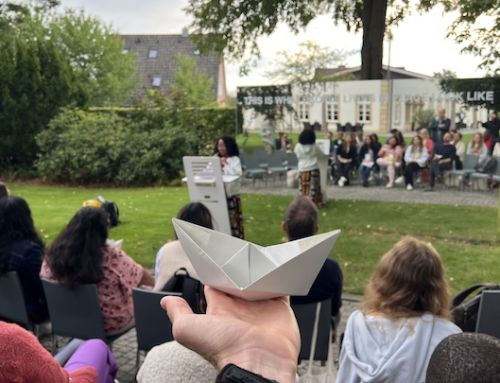
During our time in Mettingen, I also had the opportunity to lead a spiritual moment in front of the Mirror of Peace. I invited everyone to make a simple paper boat, using it as a symbol of the different journeys that had brought us into the same summer school. As we looked at our boats, we reflected on how fragile they were, and how we too are more fragile than we sometimes admit. “We need one another,” became part of the reflection, before we transformed the boats into T-shirts. The boat represented our journey, the T-shirt became the message we choose to carry from that journey. It was a simple activity, but it left me with a question that stayed with me: if fraternity were something we could wear, what would we want it to say?
The connection became especially real when we spoke about technology and artificial intelligence. Henning Müller’s discussion on AI in agriculture made me think about the farmers I know from Africa. We can talk about smarter machines, more efficient production and the future of food, but there is a person standing at the beginning of that chain. What happens when the farmer does not have the internet, the technology or even the same opportunities to access the market? For me, innovation cannot only mean moving forward faster. It has to mean making sure that the people who are already struggling are not pushed even further behind.
We also explored cities, entrepreneurship and the way communities are built. During the presentation about Lok-Viertel and our conversations in Osnabrück, I kept thinking about something very simple: who gets to imagine the future? Young people will inherit the cities, economies and communities being designed today. We will live in them, work in them and raise families in them. Being young should not mean being invisible. Sometimes the youngest person in the room notices something that everyone else has stopped seeing.
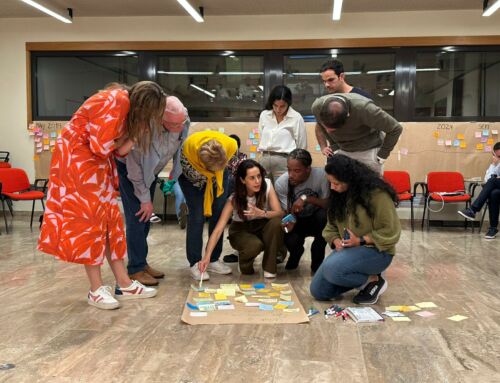
The Fraternity Challenge brought all of this from theory into something we could actually work with. My group explored “From Reciprocity to Sustainable Prosperity: Strengthening Fraternal Economic Relationships in Indigenous Communities.” We were challenged to think practically about how relationships of trust and reciprocity could become commitments that genuinely support Indigenous communities. We explored ideas around credit, community relationships and ways of helping people build sustainable prosperity together. Fraternity, I realised, is not only something we talk about. It is something we have to choose to put into practice.
I also began to understand fraternity through the people who are too often left outside the conversation. The worker with a disability who cannot enter a workplace. The young person whose idea is dismissed because of age. The farmer whose work is essential but whose share of the final value is small. These are not separate problems. They are reminders that an economy is made of human lives. If someone is consistently left at the edge, then the system itself has something to learn.
Being in Germany also made me realise that I do not have to choose between being African and being part of a global conversation. I can stand in an international room and still ask questions from Mozambique. I can listen more than I speak and still be present. I can learn from people like Luigino, Sr. Helen, Tracey, Paolo, Henning and Felix while also carrying my own experience. I did not need to have the loudest voice in the room. Sometimes, being the youngest meant having the privilege of watching carefully and discovering that there is more than one way to contribute.
I left the Summer School with something I hope I never lose: the feeling that there is room for my generation at the table. Fraternity is not about everyone being the same, having the same age, country or experience. It is about refusing to believe that we can build a future alone. I was the youngest person in the room, but I was also part of the room. And perhaps that is the image I will remember most: not a young girl standing at the edge, waiting for her turn, but a young girl sitting at the table, listening, learning and slowly realising that one day, the future being discussed around her will become hers to build.