When fraternity becomes a way of working
Echoes from the EoF International Summer School 2026 in Germany
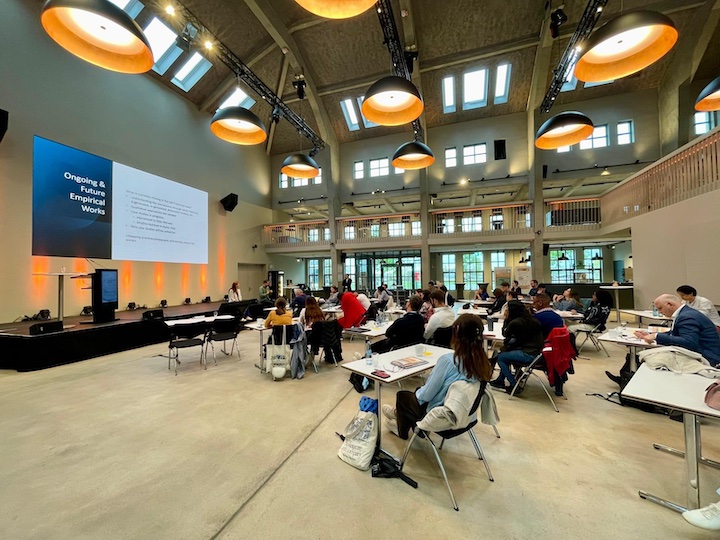
Fraternity was never meant to remain a theme on the programme.
During the EoF International Summer School 2026, held from 29 August to 3 September across Osnabrück and Mettingen, the question was what happens when fraternity becomes a way of looking at reality, doing research, building projects and approaching economic decisions.
The School brought together 30 participants from 27 countries, alongside its working group. Most were young people, with 64% aged between 17 and 35. They had been selected from 98 applications representing 37 countries, bringing with them different disciplines, professions, projects and lived experiences.
This year’s edition of the Summer School was the first to take place outside Italy and was held in collaboration with the Draiflessen Academy, the Coppenrath Innovation Centre and Innovatorium, whose support and involvement contributed to making this international experience in Germany possible.
Over the course of the week, the programme moved between the conceptual and Franciscan roots of fraternity and the effort to understand its economic implications today. Sessions explored how fraternity can shape enterprises, territories and technologies, and how some of its dimensions can be observed and measured through research such as the EoF Fraternity Index.
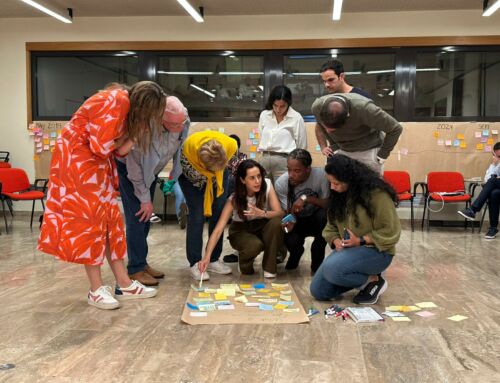
But much of the work also came from the participants themselves. Nine projects were shared through the programme’s Poster Sessions, opening conversations around research, entrepreneurship and initiatives already taking shape in different parts of the world. Through the six Fraternity Challenges, participants then worked in interdisciplinary groups starting from concrete problems brought into the School by some of them.
The challenges were deliberately different: from reciprocity and economic sustainability in Indigenous communities and fragmentation in rural areas, to impact investing, an Indigenous cotton ecosystem, digital autonomy in higher education and the role of listening and participation in relationships with people experiencing marginalisation. Across these different realities, the work asked what might change when recognition, reciprocity, participation and the common good become part of the way a problem is understood and addressed.
The experience seems to have travelled beyond the programme itself. The post-event survey suggests that the Summer School had a meaningful personal and professional impact on participants, while their reflections also revealed how the experience had shaped their understanding of fraternity.
One participant put it simply:
“The importance of living fraternity in everything we do, from the way we communicate, to the methodologies we use, to the way we live business.”
For Lili, from Cuba, one of the most meaningful insights concerned the relationship between what a project seeks to achieve and how it is built:
“Fraternity is not only something we hope to achieve as the outcome of our projects. It can also be the way we build them.”
And Tania Mendoza Gómez, from Ecuador, described the same shift in particularly practical terms:
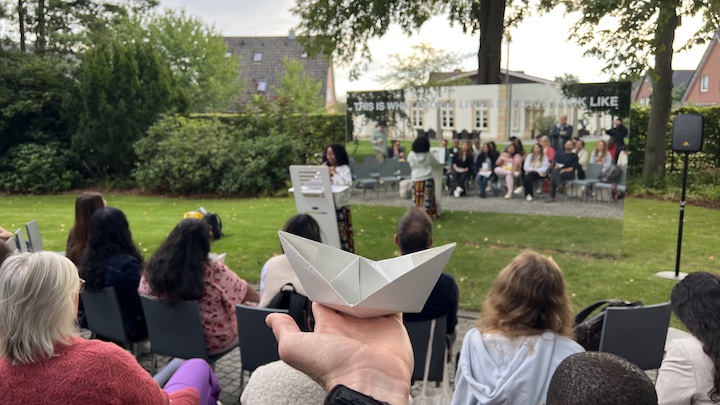
“Fraternity is not only something we discuss; it is something we build through relationships, through the way we work together and through the decisions we make.”
Other responses spoke of new ideas for existing projects, connections across countries and disciplines, and possible collaborations that began around the tables, during the Poster Sessions and through the Fraternity Challenges. One participant wrote about looking “beyond my bubble in academia” to think more concretely about how fraternity could be operationalised. Another described returning home with renewed energy to continue working for “a better economy for people and planet” in their own city and region.
Perhaps this is one of the most important echoes of the EoF International Summer School. Fraternity is not only a future outcome to be measured. It can also shape the process: how we listen, who is invited into a conversation, how knowledge is shared, and how possible responses are built together.
The 2026 edition ended in Germany. What remains now is a more concrete test: what participants do with what they saw, questioned and built when they return to their own universities, enterprises, communities and territories.
If fraternity is to become more than a theme, that is where it will have to become visible.