EoF at COP31 in Turkey
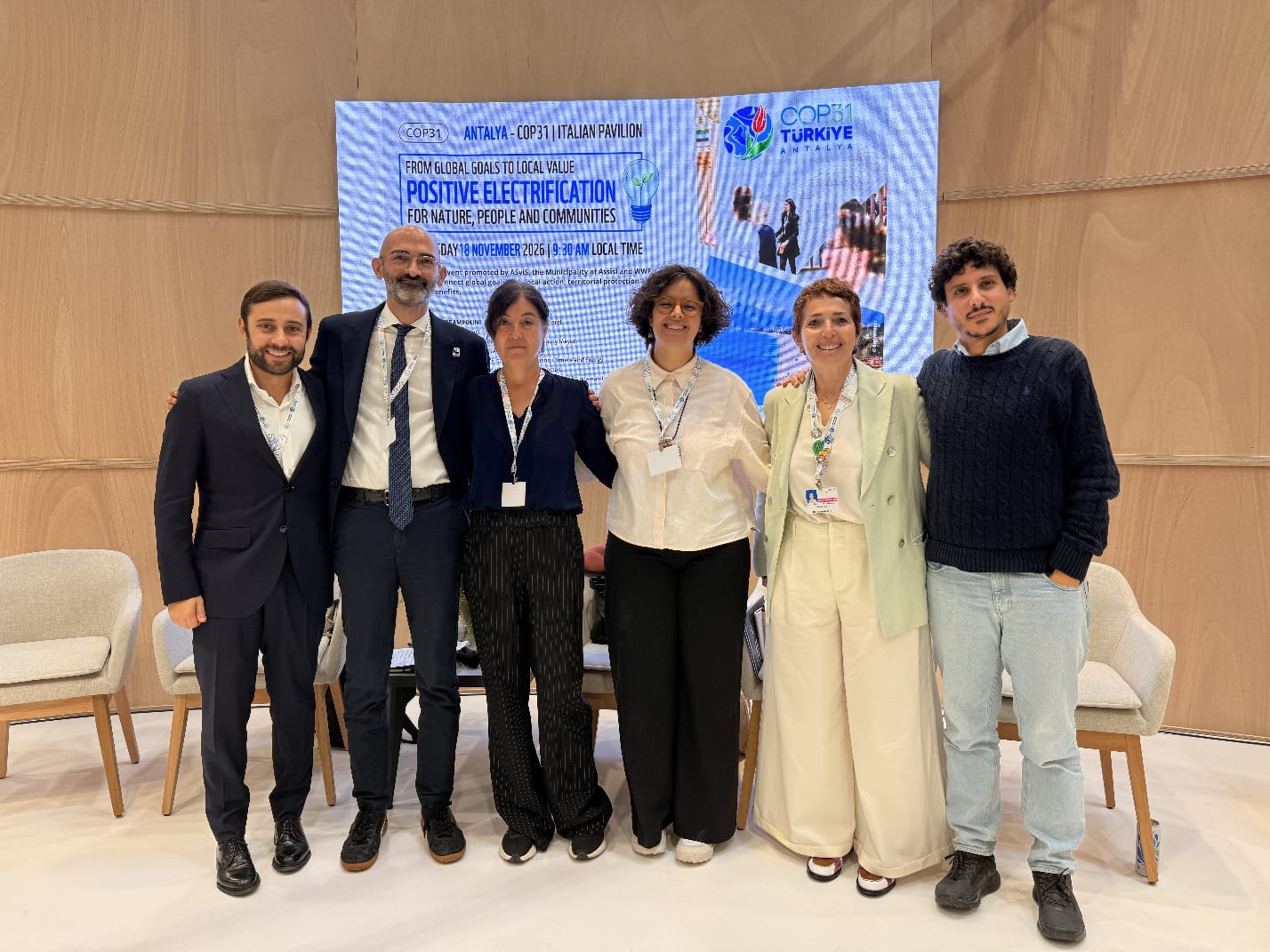
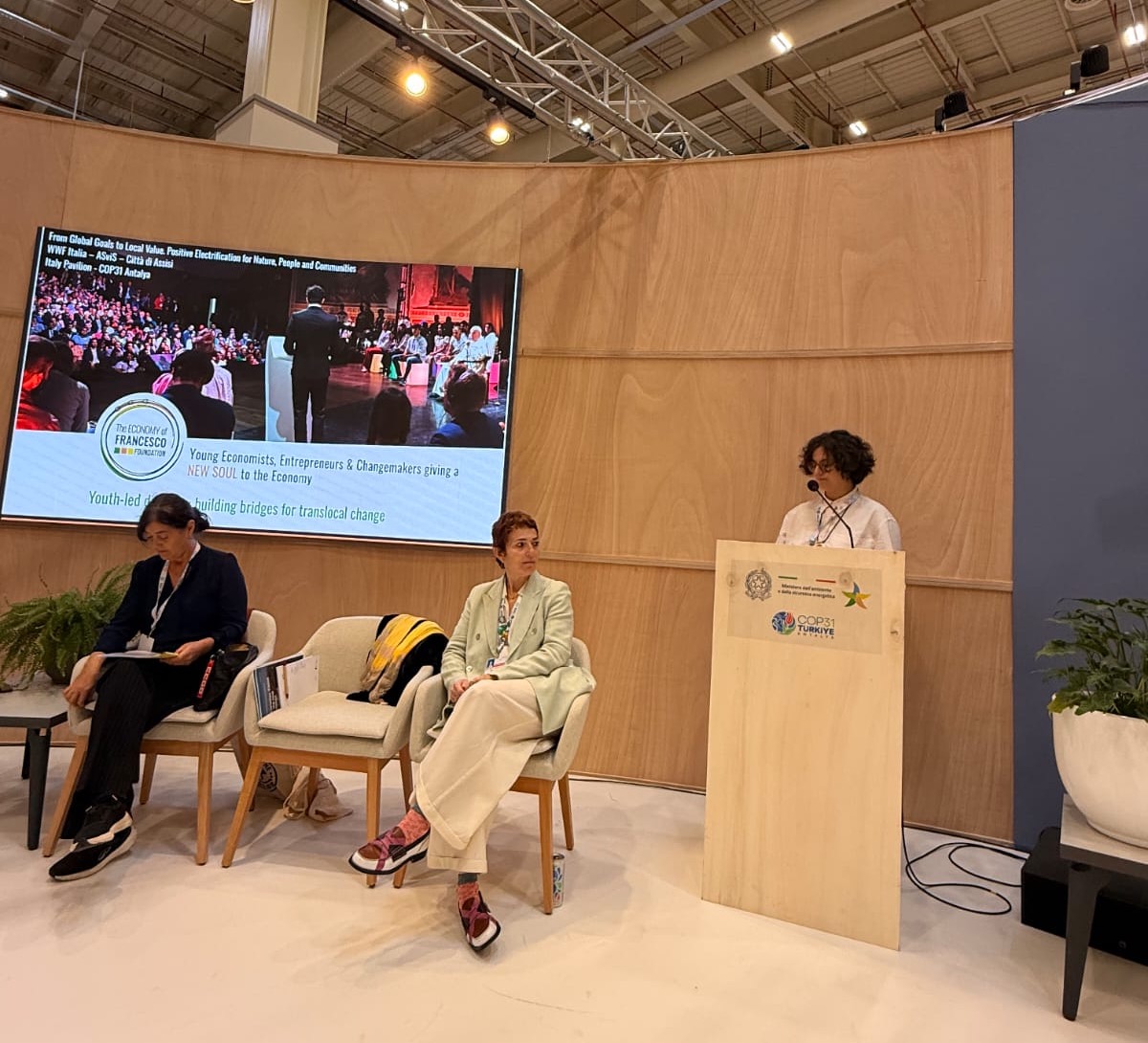
Last week, on 18 November 2026, the Economy of Francesco participated in a side event at COP31 in Turkey, as part of an event in the Italy pavilion promoted by the Italian Ministry of Environment and Energy Security and hosted by the Municipality of Assisi, ASVIS and WWF Italy.
We engaged in a discussion on ‘Positive Electrification for Nature, People and Communities’ and the need to transition from global goals to local value.
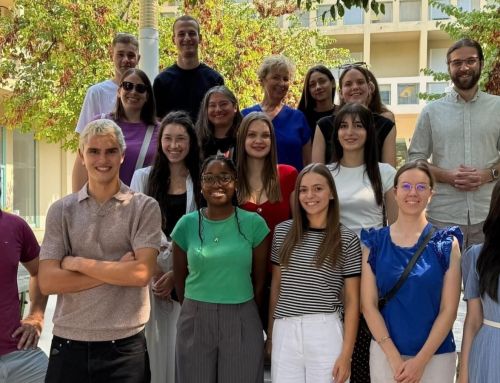
Our presence has been possible also thanks to our cooperation with the Istituto Serafico and the University of Perugia team that coordinated and supported a panel including the topics of poverty and marginalized communities in the debate on the energy transition.
Read more about the experiences of Federica Ammaturo, a member of The Economy of Francesco Foundation’s Executive Team, in Turkey!
“I was amazed and a bit scared when the team asked me to represent EoF at COP31. What a challenge, to bring EoF to such a global process for the first time!
We saw this as an opportunity to introduce ourselves to the world gathering in Antalya to discuss climate issues as the prime intergenerational, socio-ecological and economic issue of our time, and to bring the voice of a movement of your people working to give a soul to the economy of tomorrow.
I felt so proud, serving in this role, presenting our community through some beautiful stories that were born in and through EoF. This ranged from research on steward ownership linked to the current development of a community economics model in the mining sector in the Energy and Poverty village, to the experiences of Casa de Francisco y Clara in Brazil, which promotes concrete spaces of socio-ecological transformation in direct contact with vulnerable communities.
I took the opportunity to express our position on the climate crisis, affirming that, beyond the so-called green transition, we must embrace something much bigger and harder: a radical change to our economic paradigm.
Adopting an integral ecology approach, I emphasised that if we continue to pursue models of infinite growth, power and prosperity while transitioning to renewable energy sources, we will fail to address the current challenge effectively.
At EoF, we recognise that there is not just one ‘just transition’, but multiple transition pathways that consider different geographical contexts from ecological, social and economic perspectives. These differences also influence what constitutes a ‘just transition’ and for whom, emphasising the importance of promoting the principles of subsidiarity and participation, and ensuring the most vulnerable members of our communities are involved in shaping the transition.
In our final statement in Assisi in 2022, we proposed ‘a social green deal sharing clean technologies that come from fair production value chains and circular economy principles’. We believe that we can achieve this through dialogue, participation and fraternity, which we consider to be the essential foundations of truly just transitions that lead to reconciliation with justice.
At a COP that failed to deliver a strong political statement or concrete implementation tools to address climate-related challenges, we felt compelled to emphasise that the ecological transition must not perpetuate the structural inequalities of the carbon economy, enabling a select few individuals and organisations to exploit their economic and financial superiority at the expense of people and the planet.
Large-scale global inequalities cannot be attributed solely to economies that rely on polluting, non-renewable energy; rather, they are the result of economic models that depend on human inequality for their very survival.
This is what needs to be tackled in the first place: looking at the interconnections between different socio-ecological and economic dimensions, in order to avoid making ideological decisions that won’t solve the problem and will leave some people behind.
At COP, I met many inspiring young people who are working in their communities to solve problems through education, empowerment and technology. It was also a chance to share, discuss and connect with other representatives of faith-based organisations about EoF and the negotiations. I learned a lot from them and it raised questions about how we, EoF, would like to position ourselves in these global processes in future.
The COP is an event where many contradictions exist side by side: I experienced first-hand the sense of discouragement when looking at the resources, people and money mobilised to tackle one of the most critical challenges of our time, when the efforts far exceeded the results.
Calling for a change in our economic models, habits, and lifestyles is also a call to change the way we think about multilateral decision-making and connected events, in order to truly respond to the challenges we face”.
“Not all environmental solutions have the same effects on the poorest, and therefore those that reduce misery and inequality should be preferred. As we seek to save the planet, we must not neglect those who suffer. Carbon dioxide is not the only pollution that kills; inequality also fatally damages our planet”.
Pope Francis, Assisi, 2022